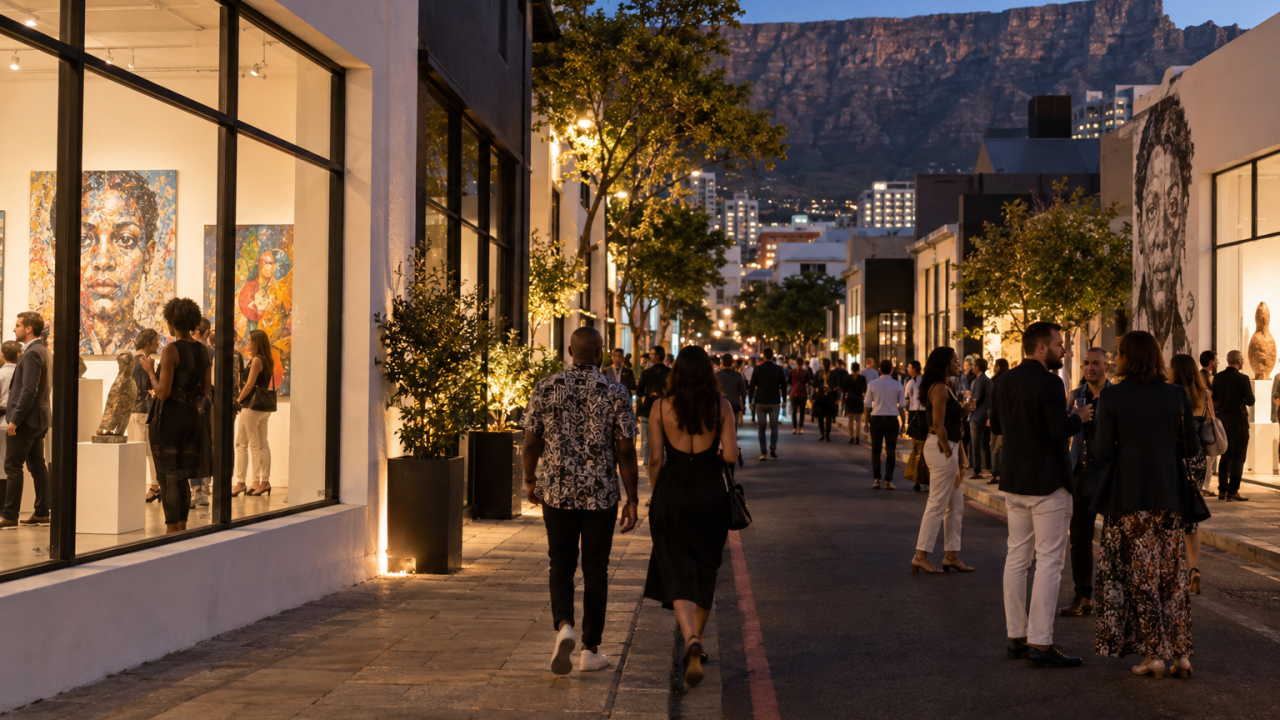
First Thursdays turns central Cape Town into a walkable evening of gallery openings, exhibitions, cultural spaces, restaurants and conversations. Participating venues open late on the first Thursday of the month, and many gallery visits are free. It is not one single festival with a fixed route: the programme changes, so planning from the official listings matters.
How First Thursdays works
Start with the official First Thursdays Cape Town programme and choose a compact area rather than trying to cross the whole city. The Central City, East City and nearby precincts may offer different clusters of venues. Check each listing for opening times, capacity rules and whether a special event needs a ticket.
What it costs
Gallery and exhibition entry is often free, but the evening is not automatically cost-free. Transport, food, drinks, special performances and purchases from artists or restaurants add up quickly. Set a budget before you leave and remember that supporting a small venue, gallery or food business helps keep the programme active.
How to have a better evening
Arrive early at popular openings, wear comfortable shoes and leave time to actually look at the work. A good plan might include three venues, a short food stop and one final exhibition rather than a rushed checklist. Use public transport or arrange a safe ride home, and keep valuables secure in busy streets.
Visit respectfully
First Thursdays takes place in a working city centre. Follow photography rules, respect venue capacity, do not block entrances and ask before recording artists or performances. The programme is a useful introduction to Cape Town’s creative scene, but it is also a chance to spend time in spaces that deserve attention beyond one evening.
Before you go
Check the current programme on the day or shortly before the event because venues and schedules can change. For other current Cape Town events, browse the Cape Town Chronicles What’s On guide.
How to build a useful route
Choose a neighbourhood cluster and mark three or four venues before you leave. The central city is compact enough to walk between many listings, but the distance between precincts can make an ambitious itinerary frustrating. Look for exhibitions, artist talks, design studios, bookshops, small theatres and food venues that fit your interests. A route that includes one familiar space and two new ones usually feels more rewarding than attempting every opening in the programme.
What happens at an opening
Gallery openings may be lively, informal and crowded. Some include short talks or performances, while others are simply opportunities to view new work and meet people. Read the listing carefully for start times, RSVP requirements and age restrictions. If a venue is full, wait outside or move to the next stop rather than pressuring staff to exceed its safe capacity.
Transport, money and comfort
Plan the trip home before the evening begins. Comfortable shoes matter because the event is best experienced on foot, and a light jacket is useful after sunset. Keep your phone and wallet secure, especially in dense crowds. Galleries may be free, but dinner, drinks, transport and paid events are not. Carry a realistic budget and consider buying a small publication or artwork if you want to support the local creative economy.
Making the most of the art
You do not need specialist knowledge to enjoy an exhibition. Read the wall text, ask a respectful question and notice how the work relates to the space. Do not touch art, lean on plinths or photograph when a venue asks visitors not to. If you share images online, credit the artist and venue when information is provided.
After First Thursdays
The best result of the evening may be discovering a gallery or artist you want to revisit during normal opening hours. Save the names of exhibitions that interest you and check whether they continue beyond the Thursday event. Use the official programme for updates because participating venues and schedules change from month to month.
Leave a Reply