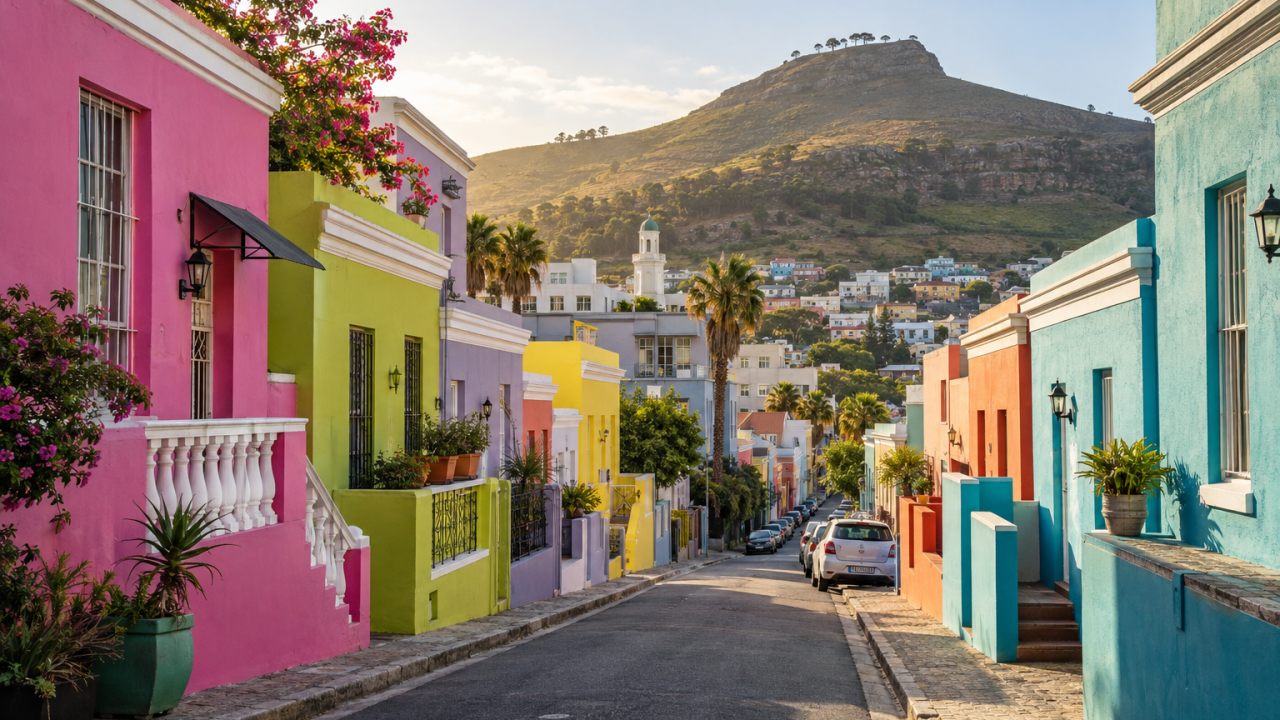
Bo-Kaap is one of Cape Town’s most recognisable neighbourhoods, but its brightly painted homes are only the surface of a much deeper story. The area at the foot of Signal Hill is a living community shaped by Cape Muslim traditions, forced removals, enslaved people brought to the Cape and generations of residents who protected their homes and culture.
Look beyond the colourful houses
A walk through Bo-Kaap can include historic streets, mosques, food traditions and views toward the city. The Iziko Bo-Kaap Museum provides historical context in a former home associated with the neighbourhood’s early nineteenth-century character. Check current opening information before visiting.
Plan a self-guided walk
Go in daylight, keep the route compact and allow time to read rather than rushing between photographs. Wear comfortable shoes because some streets are steep or uneven. A locally led walking or cooking tour can add family histories and context, but tours are paid experiences and should be booked directly with the operator.
How to visit respectfully
Bo-Kaap is not an open-air film set. Ask before photographing people, avoid pointing cameras into private homes, do not block doorways and keep noise low near places of worship. Buy from local businesses where possible and remember that residents should be able to use their streets without being treated as scenery.
Food and cultural context
Cape Malay food is part of the neighbourhood’s cultural story, but no single restaurant represents every family or tradition. Learn the names and history of dishes, ask about ingredients and avoid reducing the community to a colourful backdrop or a list of spice-heavy clichés.
Why the visit matters
A good Bo-Kaap visit connects architecture with memory, religion, food and displacement. Take fewer photographs, listen more carefully and use museum or locally guided information to understand what you are seeing.
A short historical context
Bo-Kaap’s history is connected to Cape Town’s colonial period, when people from across the Indian Ocean world were brought to the Cape, many as enslaved people, and Muslim communities developed despite restrictions on worship. The neighbourhood later became an important centre of Cape Muslim life. Forced removals and apartheid-era policies threatened communities across the city, making the survival of local institutions, families and traditions especially significant.
The painted façades have several explanations and should not be reduced to one simple origin story. Some residents describe colour as a way of expressing identity and celebration; others emphasise the practical history of ownership, maintenance and neighbourhood change. Listen to local guides and museum interpretation rather than presenting an attractive myth as settled fact.
What to include on a walk
Combine the Bo-Kaap Museum with a slow walk through the residential streets, then look for locally run food or cultural businesses. Check opening hours before you go, because small museums and shops may not operate on the same schedule as large attractions. A guided walk led by someone with a connection to the area can add oral history, but ask what the tour includes and how it benefits local residents.
Photography and privacy
The most important etiquette is simple: homes are private, people are not props and religious spaces deserve particular care. Ask before photographing residents, children, shopkeepers or ceremonies. Do not enter a doorway or courtyard for a better angle, and avoid blocking narrow pavements. If a resident asks you not to take a picture, respect that immediately.
Food as living culture
Cape Malay cooking reflects layered histories and family practice. Bobotie, samoosas, pickled fish and spiced curries are often associated with the wider Cape food tradition, but recipes vary between households. Treat food as a living culture rather than a themed souvenir, and support local restaurants, cooks and shops where possible.
Before you visit
Wear comfortable shoes, carry water, visit in daylight and plan your route. Learn a little history before arriving, then leave space for what residents and local institutions want visitors to understand. A respectful visit is slower, quieter and more meaningful than a quick hunt for the most colourful wall.
Leave a Reply